

6 LESSONS FROM 15 YEARS IN ARCHITECTURE FROM AN ARCHITECT
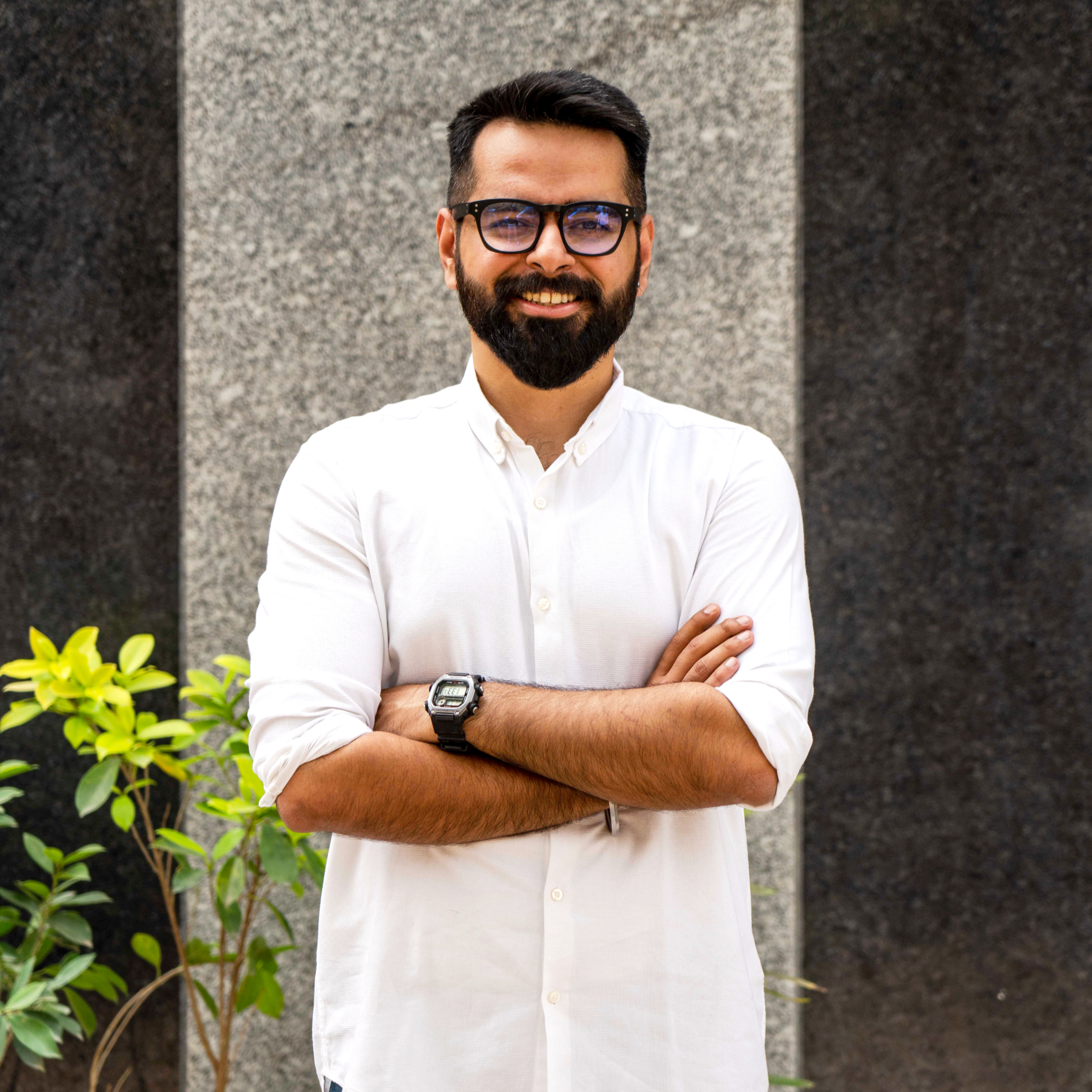
What building things taught me about building a career in architecture — and a studio.
I started architecture college in 2010 with zero connection to the field. No architect in the family. No childhood obsession with buildings. I walked in not knowing what I was walking into.
Fifteen years later, I run Unbox Design — a studio of 15 architects and designers working on projects across India, from residences to boutique hospitality. Some days it's a pinch-me moment. Most days I'm wearing ten hats simultaneously.
Looking back, I can trace almost everything — the good and the hard — to six lessons that I didn't know I was learning at the time. I'm writing them down here for anyone building a career in this otherwise unforgiving industry.
LESSON 01 OF 06
Fall in Love with the Process.
WHERE IT BEGAN
In my first year of college, something clicked. I saw how a line on paper meant something. How a dot had intention. How you could build an entire world in your mind — every room, every shadow, every texture — long before a single brick was laid. That was the language of architecture, and I fell in love with it immediately.
Not with the glamour of it. Not with the prestige or the salary or the idea of having your name on a building. With the language itself. With the process of thinking through a problem and translating it into space.
WHAT THAT LOVE BUILT
That kind of love for the process builds a patience for craft that no external motivation can manufacture. It's what kept me up at night voluntarily, studying drawings I wasn't asked to study, joining competitions I didn't need to join, helping seniors on projects I had no business being on.
When you love the process, you stop needing the result to validate you. The result keeps changing — what project you're working on, what recognition you receive, what scale you're operating at. But the process is the one thing that remains entirely yours.
The result will keep changing. The process is the only thing you can truly own.
TAKEAWAY — Fall in love with the process, not the result.
LESSON 02 OF 06
Your Network Is Your Curriculum.
MY REAL TEACHERS
The formal curriculum in architecture college is just the scaffolding. The real education happens in the corridors, the late nights, the conversations that spill past midnight over someone else's project.
I was fortunate to have seniors who became actual teachers. Not in a formal way — they didn't sit me down and lecture me. They referred me books. They pointed me to competitions worth entering. They pulled me into late nights on projects I had no business being on yet. And I showed up, every time, with everything I had.
WHY THEY GAVE THEIR TIME
They didn't owe me any of it. They gave it because effort was being matched with genuine curiosity. That changed my trajectory entirely. I was solving problems years ahead of where my batch was. Not because I was more talented, but because I had access to knowledge that couldn't be downloaded — the osmosis of working alongside people who were further down the road.
Architecture is built on lineages of knowledge. Studio cultures. Mentorships. You can't download that. You earn it.
The industry runs on relationships. Every studio has its own culture, its own way of seeing, its own vocabulary. The only way to inherit that is proximity. Be in the room. Be useful before being asked. Treat every relationship — with a senior, a peer, a junior — with real respect and real commitment.
“Seek seniors who challenge you. Be worth their time. The knowledge that changes you rarely comes from a classroom.”
TAKEAWAY — Your network is your curriculum. Earn it.
LESSON 03 OF 06
Detours Build Depth.
GOA — 5 PEOPLE, REAL WORK
After college, I went to Goa for an internship at a studio of five people. Two founders, three others. Small by any measure. But from week one, I was doing actual work — residential second homes, boutique hotels. Not filing drawings. Not making tea. Thinking, designing, contributing.
Goa at that time was a different place. It was slow in the best way. People moved there to live, not to party or curate their Instagram feed. That pace caught me and taught me something I didn't know I needed: intentionality. Think before you draw. Understand before you propose.
THE FOREST SCHOOL
Before joining my first proper job, I took another detour. I spent weeks in a remote forest village helping build a school. Not designing one — building one. Cow dung floors pressed by hand. Straw and thatch roofs. Bricks pressed from local clay, dried in the sun, laid in courses. Twenty strangers — photographers, journalists, civil engineers, students — all working together with no software, no renders, no client presentations.
Just material, gravity, and intention.
The experiences that don't fit your CV are often the ones that build your character.
Both of those experiences — the slow studio in Goa, the school in the forest — looked like detours at the time. No obvious career ROI. But they gave me something no job ever could: a physical, tactile, embodied relationship with what I was designing. I understood materials differently. I understood scale differently. I understood that architecture is, fundamentally, about making things real.
“Chase what scares you a little. The industry will commoditise your skills. Only you can protect your depth.”
TAKEAWAY — Detours build depth. The unglamorous ones most of all.
LESSON 04 OF 06
Be Undeniable in Every Room.
STUDIO LOTUS — 25 TO 50
I joined Studio Lotus when it was a team of 25. By the time I left, it had grown to 50. I didn't know it then, but I was watching a studio become a studio in real time — watching how scale changes process, how culture either compounds or fractures under growth, how a founder-led vision survives when it suddenly has to pass through twenty more people to reach the work.
I worked across residential, hospitality, commercial, retail. Multiple scales. Multiple typologies. I was building a design vocabulary that only comes from variety and volume of real work over real time. There is no shortcut to this. You cannot compress it.
HOW UNBOX ACTUALLY BEGAN
When I left Lotus, I had no plan to start a studio. I was simply leaving.
My ex-boss and mentor offered me a project on the side — something he believed I was talented enough to take on independently. Shortly after, a former colleague referred me to their family member who was redeveloping their home.
That was it. Two projects. A belief that I could figure it out. Not a grand plan or a funded venture or a dramatic leap. Just trust, accumulated over years of showing up and doing the work with full commitment.
Opportunities don't come from pitching yourself. They come from being someone people trust. Your first break will come from someone who watched you work. Build trust quietly, consistently.
TAKEAWAY — Be undeniable in every room you're already in.
LESSON 05 OF 06
Growth Means Becoming a Leader.
NINE YEARS IN
Unbox Design is nine years old. Fifteen architects and designers. Projects pan India — residential, commercial, boutique hospitality. When I look at where we are, there are genuinely days that feel surreal.
A pinch-me moment, as I said.
And then there are the other days. The days where I am wearing ten hats before noon.
THE HATS
Business development. Client management. Team management. Project management. Marketing. Finance. HR. Culture. Hiring. Retention.
And somewhere woven through all of it — the thing I came here for in the first place — design.
Nobody tells you this: when you build something meaningful, the thing you love most doesn't disappear. It just moves. It shifts to the edges of the day, where the noise finally stops.
I still design. I just do it at midnight in the studio when the day's firefighting is done. Or at 2am in bed, sketching on my iPad while everyone else is asleep.
The hours are different. The peace of those hours is different too — harder earned, but somehow more yours.
That's the honest reality of growth. The design doesn't leave. You just have to want it enough to go find it at the end of a long day.
TAKEAWAY — Growing a practice means growing into a leader.
But never stop being a designer.
LESSON 06 OF 06
Build Your Love First.
WAS IT LUCK?
Looking back, I was genuinely fortunate. The sequence of events. The college that exposed me to the right seniors. The mentor who believed in me enough to hand me a project. The colleague who referred me at just the right moment. The slow Goa studio that taught me to think. The forest that taught me to build.
But here is what I've come to understand about fortune: it tends to find the people who are already in the right rooms, doing the right things, for the right reasons. I wasn't lucky by accident. I was in position.
WHAT THIS INDUSTRY ACTUALLY REWARDS
This industry is unforgiving. It demands years before it gives back significantly. It will test your patience, your financial stability, your confidence, your relationships. Many people leave. And they leave because they were here for the wrong reasons — the title, the glamour, the idea of it rather than the reality.
This industry is unforgiving to those here for the wrong reasons. It is quietly, consistently generous to those here for the work.
What carries you through the hard parts is not talent alone, and certainly not ambition alone. It is love for the craft. A genuine, sustained, unglamorous love for the act of making things — of turning thought into space, of solving problems with material and light and proportion.
That love is what makes you stay in the room when the project goes sideways. What makes you learn from the mistake instead of running from it. What makes the ten-hat days feel like a privilege rather than a burden.
“Build your love for the craft first. The rest — the recognition, the clients, the studio —follows from that.”
TAKEAWAY — Build your love for the craft first. The rest follows.
In Summary
If I had to distil fifteen years into six lines:
01 — Fall in love with the process, not the result.
02 — Your network is your curriculum. Earn it.
03 — Detours build depth. Embrace them.
04 — Be undeniable in every room you’re already in.
05 — Growing a practice means growing into a leader.
06 — Build your love for the craft first. The rest follows.
"If you're early in your career and something in this piece hit differently — we're always open to meeting people who love the work. Write to us."


Comments