
Design and build is not a service. It's a position.

Why most projects fail between the drawing and the wall — and what it means to stay in the room until it's done.
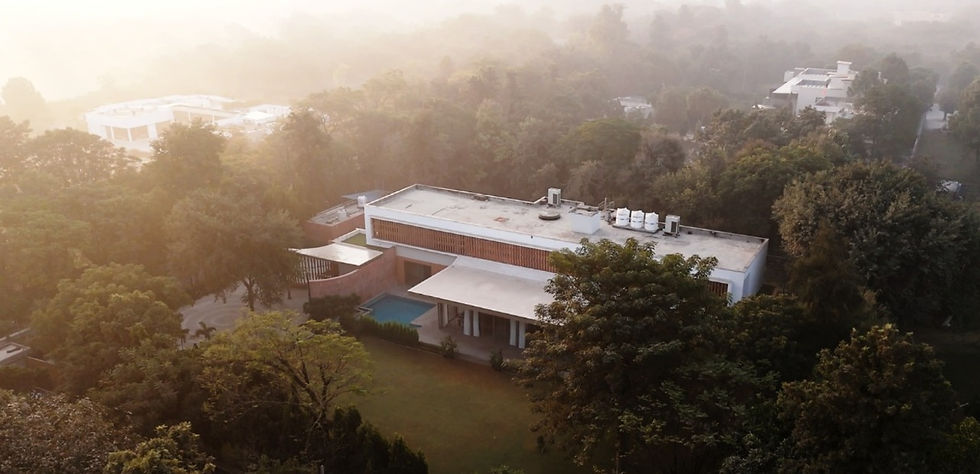
There's a moment in almost every construction project where the architect hands over a set of drawings and steps away. The contractor takes over. The site runs on its own logic. And slowly, quietly, the gap between what was designed and what gets built begins to open.
A wall moves six inches because it's easier for the contractor. A material gets substituted because the specified one is out of stock and no one wants to wait. A detail that took three days to draw gets simplified on site in thirty seconds. None of these decisions are malicious. They're just what happens when the person who designed something isn't the person building it.
This is the problem that design and build is supposed to solve. At Unbox, it's the reason we exist the way we do.
What "design and build" actually means
In India, the term gets used loosely. A lot of firms will tell you they do design and build. What many of them mean is: we'll design your space and then refer you to contractors we know. That's coordination. It's useful. But it's not the same thing.
True design and build means one firm holds both responsibilities — creative and constructional — under a single contract, with a single point of accountability. The architect who drew the section detail is also responsible for making sure that detail is executed correctly on site. There's nowhere to hide, and no one to blame.
The architect who drew the section detail is also responsible for making sure that detail is executed correctly on site. There's nowhere to hide, and no one to blame.
For the client, this has one profound implication: the person most invested in the design surviving intact is also the person with the authority to protect it during construction. That's a fundamentally different dynamic than the traditional model, where the architect and contractor have separate contracts, separate incentives, and often, a quietly adversarial relationship.
Where projects go wrong - and why
Most people who've been through a construction project in Delhi or Noida will recognise this: the design looked beautiful in the presentation. The 3D renders were compelling. And then somewhere between the foundation and the finishing, it became something else.
This isn't always the contractor's fault, and it isn't always the architect's. It's the model itself. When design and execution are separated, every decision that happens on site — and there are hundreds — gets made without the full context of why the design was the way it was.

What it means in practice at UNBOX
When we take on a project, we're not handing over at any stage. Our team is on site through execution. We're doing material procurement, site supervision, making the calls when something unexpected comes up — and something always comes up.

Take for example this patterned brick wall. The level of detail in the drawing, marking each header and stretcher course by course, procuring the right material, installing the brick at the correct angle on site — those decisions couldn't have been delegated to a site supervisor working from a drawing. They required someone who had been thinking about that space for months to be present when those calls were made.
The result is spaces where the detail holds up in person — not just in the renders, not just in the photographs, but when you're actually standing in them.
Why more clients across Delhi NCR are asking for it
There's a growing awareness among serious clients — people building homes in South Delhi, Noida, Gurgaon — that the traditional architect-plus-contractor model has a structural flaw. They're asking harder questions before they engage a firm: who is on site? Who makes decisions when something changes? Who is accountable when it doesn't match the drawing?
Design and build is the honest answer to those questions. One firm. One contract. One set of people who care deeply that the space turns out exactly as designed — because their name is on both the drawing and the execution.
One firm. One contract. One set of people who care deeply that the space turns out exactly as designed




Comments